Less cold stress
Appropriate brooding warmth helps chicks avoid chilling and excessive huddling. Cold chicks may crowd together rather than move freely to feed and water.
Young chicks need a warm, dry environment while their ability to regulate body temperature develops. The right brooder provides comfortable warmth, fresh air and room to move away from the heat.
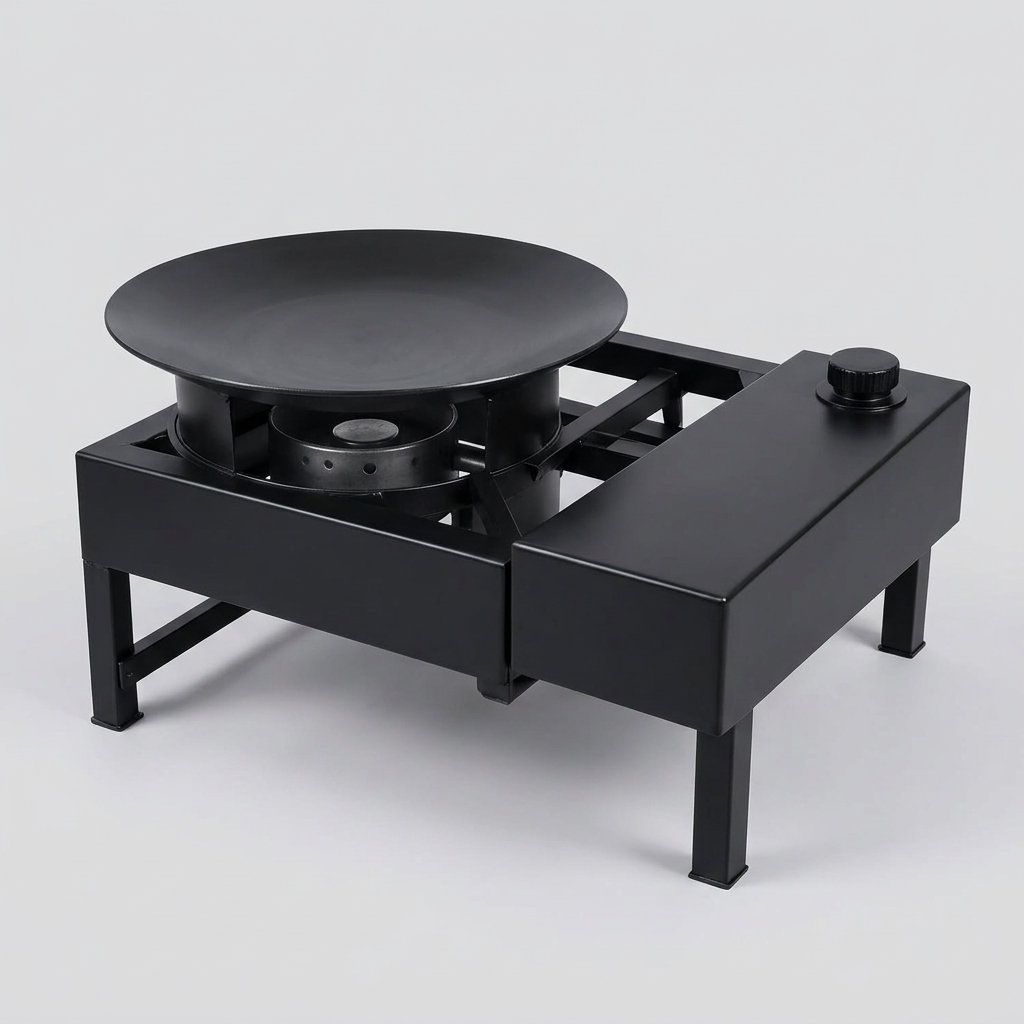
The supplied image shows a burner beneath a broad metal plate, a side reservoir and a low supporting frame. Heat from combustion can warm the metal and surrounding air. The plate is also pictured as a cooking surface; that does not establish suitability for chicks.
A true temperature regulator measures temperature and adjusts heat to a set point. No thermostat, temperature sensor or automatic cut-off is demonstrated in these photos. Adjusting oil flow manually is not the same as automatic temperature control.
Do not place this unit among chicks or in an occupied poultry house until its approved fuel, emissions, exhaust arrangement, clearances and poultry-use instructions have been verified.
Appropriate brooding warmth helps chicks avoid chilling and excessive huddling. Cold chicks may crowd together rather than move freely to feed and water.
Suitable warmth supports normal activity, feeding and drinking. Too much heat can be as harmful as too little; a hotter burner does not mean better care.
Dry litter, gentle ventilation and protection from direct drafts matter alongside temperature. Sealing a house to retain heat can let moisture and harmful gases build up.
A brooder needs a warmer area and a cooler retreat. Chicks must be able to move between them without being trapped against hot metal or exposed flames.
Use a suitable thermometer at chick height, check several locations, and follow breed-specific brooding guidance. Behaviour is a warning signal, not a substitute for measurement.
Chicks tightly crowding the warmest area and calling persistently can indicate chilling. Uneven clustering can also indicate drafts or uneven warmth.
Chicks moving to the edges, panting or holding their wings away from the body may be overheating. They need a cooler area and prompt assessment.
A reasonably even distribution, relaxed resting and normal feeding and drinking are encouraging. Keep monitoring; illness can also change behaviour.
Any combustion heater can expose chicks and people to carbon monoxide, smoke and other pollutants if fuel or combustion conditions are unsuitable. Used engine oil can contain hazardous contaminants. A blue flame, lack of visible smoke or a low fuel price is not proof of clean air. Hot plates, flame, spilled fuel and litter also create burn and fire risks. Ventilation alone does not certify this unit safe, and a carbon-monoxide alarm does not detect every pollutant.
Written confirmation that this exact model is intended for poultry brooding, with a specific approved fuel—not a general “old oil” label.
Tested emissions and a professionally specified exhaust and fresh-air arrangement. Do not improvise an unflued installation in a chick enclosure.
A documented thermostat or controller if automatic regulation is claimed, including sensor position, operating range and overheat protection.
Manufacturer-specified clearances from litter and combustible materials, a stable location, guards against contact and a safe shutdown procedure.
Verified flock capacity and room conditions, cleaning and maintenance guidance, and a brooding plan reviewed with a qualified poultry adviser.
Until these details are confirmed, use a purpose-built poultry brooder approved for the setting. No flock capacity, fuel consumption, safety certification or savings percentage is claimed for this unit.
Ask about the heating unitNot by itself. A valve changes fuel flow, while brooder temperature also depends on weather, ventilation, room size and heat losses. Only a verified sensor-and-controller system can support an automatic regulation claim.
No safe contact method is established by this photograph. A hot metal cooking plate can cause burns and uneven heating. Do not put chicks on it or improvise a brooder from the pictured unit.
That requires measured fuel use, approved fuel prices, maintenance, ventilation and exhaust costs, and comparison at the same safe brooder temperature. Cheap oil alone does not establish lower total costs or safe operation.
Move them away from suspected heat or fumes to a safe, appropriately warm environment, keep people out of any unsafe atmosphere and contact a qualified poultry professional or veterinarian. Do not rely on changing the flame as a diagnosis.
General brooding guidance is informed by university poultry-extension resources. These sources do not endorse or certify the Afriflame heater.